
The gaming world is in constant flux, always pushing boundaries and redefining how we interact with digital entertainment. In 2025, one of the most transformative shifts continues to be the rise of cloud gaming. Far from being a niche concept, cloud gaming is rapidly becoming a mainstream option, promising a future where high-end hardware is no longer a prerequisite for enjoying the latest AAA titles. But what exactly is cloud gaming, and how does this intricate technology deliver a seamless gaming experience to millions?
This comprehensive 2025 guide will demystify cloud gaming, exploring its core mechanics, the cutting-edge technology that powers it, and the dominant gaming streaming services shaping its landscape. We'll delve into current cloud gaming trends US, analyze the impressive cloud gaming market growth, and examine the critical role of advancements like 5G networks. Whether you're a seasoned gamer curious about the future or a newcomer looking to understand this revolutionary concept, prepare to unlock the full potential of gaming without limits.
What Exactly is Cloud Gaming?
The Core Concept: Streaming Your Games
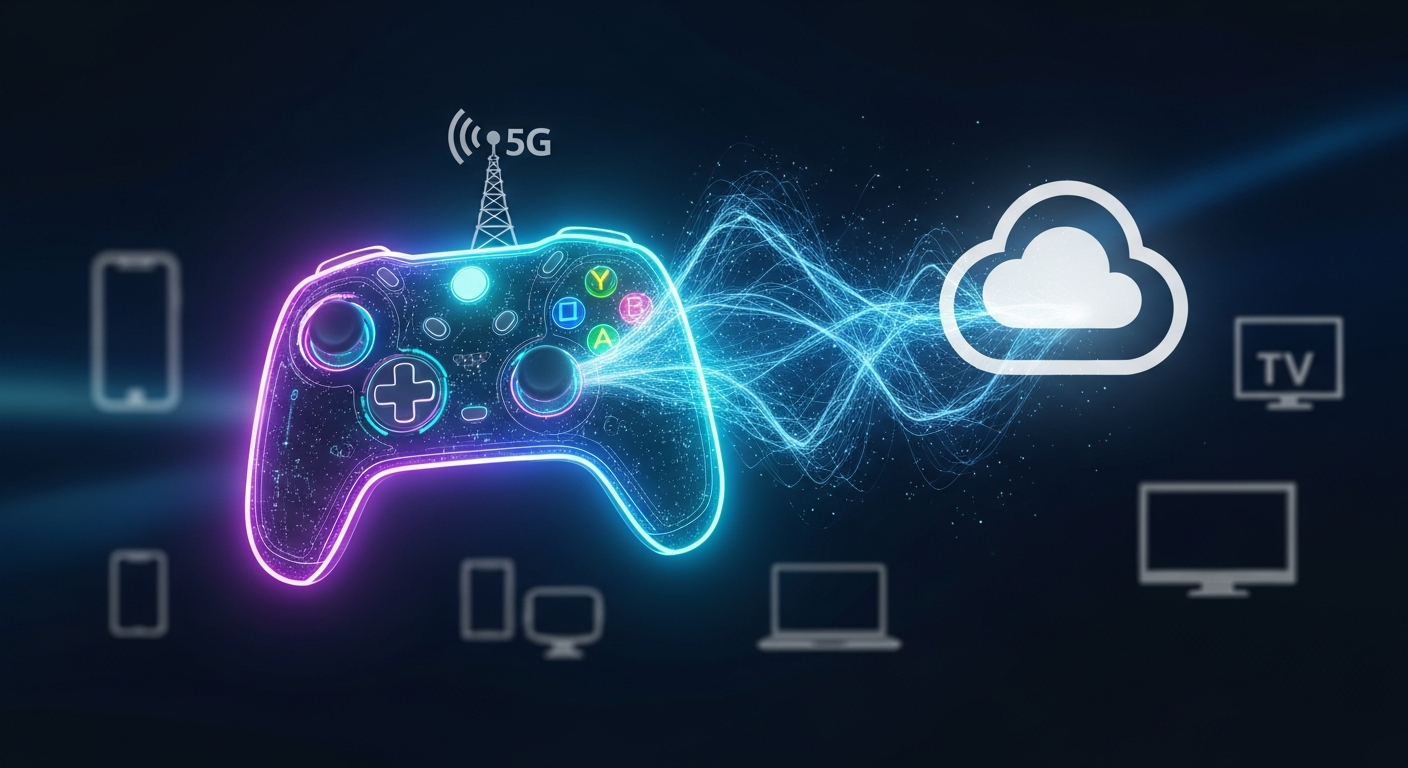
At its heart, cloud gaming, often referred to as gaming-as-a-service or game streaming, is incredibly simple: it's playing video games remotely. Instead of requiring a powerful local console or PC to run a game, the game itself is executed on a remote server located in a data center. Imagine watching a high-definition movie on Netflix or Hulu; cloud gaming operates on a similar principle. Your inputs (controller presses, mouse movements) are sent to the remote server, which processes them, renders the game, and then streams the video and audio back to your device in real-time. This eliminates the need for expensive downloads, installations, or hardware upgrades.
Beyond the Box: Redefining Hardware Needs
One of the most appealing aspects of cloud gaming is its liberation from traditional hardware constraints. Because the heavy lifting of game processing occurs in the cloud, users can access graphically intensive games on a wide array of devices. This includes not just laptops and desktops, but also smart TVs, web browsers, and crucially, cloud gaming for mobile devices like smartphones and tablets. This paradigm shift means that a high-end gaming PC or a dedicated console is no longer the gatekeeper to premium gaming experiences, significantly expanding the accessibility of the medium. It's a key driver in the accelerating cloud gaming market growth we're witnessing today.
How Cloud Gaming Technology Works: A Deep Dive
The Power of Remote Servers
The magic of cloud gaming begins in massive data centers, home to racks of powerful servers equipped with high-performance CPUs and GPUs - essentially, super-powerful gaming PCs. When you launch a game on a cloud gaming platform 2025, a dedicated virtual machine or container on one of these servers is provisioned for you. This server runs the game, processing all the complex computations, rendering the stunning graphics, and generating the game's audio. It's an intricate dance of hardware and software working in tandem, all happening hundreds or even thousands of miles away from your actual play space.
Decoding Latency: The Battle for Responsiveness
Latency is the archenemy of cloud gaming. It refers to the delay between your input (e.g., pressing a button) and the corresponding action appearing on your screen. In traditional local gaming, this delay is negligible. In cloud gaming, your input has to travel to the remote server, be processed, and then the video stream has to travel back to you. Minimizing this round-trip time is paramount for a fluid and enjoyable experience. Cloud gaming technology has made significant strides in this area, utilizing advanced video encoding techniques (like low-latency H.264 or AV1), intelligent network routing, and geographically distributed server farms to place servers as close to players as possible. The goal is to make the experience feel as close to local gaming as possible, making every millisecond count.
The Crucial Role of Your Internet Connection (and 5G)
A stable, high-speed internet connection is the backbone of any reliable gaming streaming services. For a crisp 1080p stream at 60 frames per second, a download speed of at least 25-30 Mbps is typically recommended, with higher speeds needed for 4K resolutions. More importantly, low ping (latency) is essential. A wired Ethernet connection is always preferred for stability, but advanced Wi-Fi 6/6E can also provide a strong connection. This is where cloud gaming and 5G networks become a game-changer. 5G's ultra-low latency and high bandwidth capabilities are perfectly suited to overcome many of the traditional internet infrastructure limitations, promising robust mobile cloud gaming experiences without the need for Wi-Fi. This synergy is a major factor in the anticipated cloud gaming market forecast for explosive growth, particularly in the US cloud gaming industry report.
Exploring Cloud Gaming Platforms and Services in 2025
Leading Gaming Streaming Services: Who's Who?
The landscape of cloud gaming platforms 2025 is vibrant and competitive. Major players continue to refine their offerings and expand their game libraries. Names like NVIDIA GeForce NOW, Xbox Cloud Gaming (formerly xCloud), PlayStation Plus Premium, and Amazon Luna remain prominent. Each platform offers a unique value proposition, whether it's bringing your existing PC game library to the cloud (GeForce NOW), integrating with popular console subscriptions (Xbox, PlayStation), or offering curated channels (Luna). Understanding their distinct features and subscription models is key for consumers.
Cloud Gaming for Mobile Devices: A New Frontier
The explosion of cloud gaming for mobile devices is arguably one of the most exciting cloud gaming trends US. With powerful smartphones and tablets, coupled with the ubiquity of mobile internet and the increasing rollout of 5G, mobile gaming is no longer limited to casual puzzle games. Players can now stream graphically intensive console-quality titles directly to their phones, often with support for Bluetooth controllers. This vastly expands the potential audience for high-fidelity gaming and blurs the lines between mobile, console, and PC gaming, making it a critical component of the overall cloud gaming market growth strategy for providers.
The Evolving Landscape of Cloud Gaming Providers
Beyond the behemoths, the cloud gaming space is seeing continuous innovation. Niche services, regional providers, and even game publishers experimenting with their own streaming solutions are contributing to a dynamic market. This competitive environment benefits consumers, driving down costs, improving service quality, and broadening the selection of games available. The race to optimize cloud gaming technology and expand global server infrastructure is intense, all aiming to capture a larger share of the burgeoning market.
The Benefits of Cloud Gaming: Why Gamers Are Turning to the Cloud
Unprecedented Accessibility and Device Flexibility
One of the foremost cloud gaming benefits and challenges is the unparalleled accessibility it offers. Gamers are no longer tied to a single device or location. With just an internet connection, they can pick up their game progress on a smart TV in the living room, switch to a laptop in a coffee shop, or continue on their smartphone during a commute. This "play anywhere, anytime" philosophy is a powerful draw, democratizing access to gaming content that was once restricted by hardware ownership.
Cost-Effectiveness: Gaming Without the High Upfront Investment
High-end gaming PCs and consoles can represent a significant upfront investment, often running into hundreds or even thousands of dollars. Cloud gaming effectively bypasses this barrier. For a monthly subscription fee, users gain access to powerful remote hardware and, in many cases, a library of games. This shifts the economic model from ownership to subscription, making premium gaming more affordable and accessible to a broader demographic. This financial advantage is a significant driver of cloud gaming market growth.
Instant Play, Vast Libraries, and Future-Proofing
Imagine never having to download a large game file again, or worry about whether your graphics card meets the minimum requirements. Cloud gaming offers instant play: click a game, and it launches almost immediately. Many services also provide access to extensive game libraries, allowing subscribers to explore new titles without individual purchases. Furthermore, the underlying server hardware is constantly updated by the provider, meaning gamers are always playing on the latest and greatest technology, effectively "future-proofing" their gaming experience against rapid hardware obsolescence.
Navigating the Challenges: The Downsides of Cloud Gaming
Internet Dependence and Latency Concerns
Despite significant advancements in cloud gaming technology, the Achilles' heel remains internet dependency. A weak, inconsistent, or slow internet connection can quickly degrade the experience, leading to input lag, blurry visuals, or complete disconnections. While 5G networks are addressing this, not everyone has access to such advanced infrastructure, particularly in rural areas. Latency, though continuously being reduced, can still be a factor for highly competitive, reaction-based games where every millisecond counts.
Game Ownership, Subscriptions, and Digital Rights
The shift from game ownership to subscription-based access raises questions about digital rights. When subscribing to a service, users typically rent access to a library of games rather than owning them outright. This means that if a game is removed from the service or if a subscription is canceled, access to those titles is lost. This contrasts with traditional gaming where purchased games can be played indefinitely, even offline. This aspect is one of the key cloud gaming benefits and challenges that consumers must weigh.
Data Consumption and ISP Limitations
Streaming high-definition video games for hours can consume a significant amount of data. For users with strict data caps from their Internet Service Providers (ISPs), this could quickly become a prohibitive factor, leading to additional charges or throttled speeds. While data compression techniques are constantly improving, cloud gaming remains a data-intensive activity, and consumers need to be aware of their data plans and usage patterns. This is a particularly relevant consideration when discussing cloud gaming for mobile devices without unlimited data plans.
Cloud Gaming Market Growth and US Industry Trends (2025 Forecast)
Global Market Expansion and Projections
The cloud gaming market growth trajectory is steep and continues its upward climb in 2025. Analysts predict substantial expansion, driven by increasing internet penetration, the widespread adoption of 5G, and a growing consumer appetite for accessible, high-quality gaming experiences. The global market is projected to reach tens of billions of dollars within the next few years, establishing cloud gaming as a formidable segment of the overall gaming industry. This growth is not uniform, with specific regions showing faster adoption rates.
US Cloud Gaming Industry Report: Key Findings
According to the latest US cloud gaming industry report, the United States remains a pivotal market, characterized by early adoption and significant investment from both technology giants and startups. Key findings highlight the increasing number of subscribers to cloud gaming platforms 2025, particularly those bundled with existing console subscriptions. The report also underscores the competitive landscape, with major players vying for market share through exclusive content, technological innovation (especially in cloud gaming technology), and aggressive marketing campaigns. Consumer awareness and satisfaction are also on the rise, suggesting a maturing market.
The Synergistic Relationship Between Cloud Gaming and 5G Networks
The advent of cloud gaming and 5G networks represents a powerful synergy poised to redefine mobile and wireless gaming. 5G's promise of significantly lower latency, much higher bandwidth, and greater network capacity directly addresses the primary technical hurdles of cloud gaming. This enables smoother, more responsive gameplay on the go, making high-fidelity gaming truly ubiquitous. As 5G infrastructure continues to roll out across the US and globally, its impact on the accessibility and quality of cloud gaming experiences will be profound, accelerating cloud gaming trends US and driving further cloud gaming market growth.
The Future is Streaming: Concluding Thoughts on Cloud Gaming
Cloud gaming, in 2025, is no longer a futuristic concept but a tangible reality transforming how millions play. From its intricate cloud gaming technology leveraging remote servers to its profound impact on cloud gaming for mobile devices, it represents a monumental leap forward in accessibility and convenience. While challenges like internet dependency and subscription models persist, the benefits - including cost-effectiveness and device flexibility - are compelling.
The vigorous cloud gaming market growth, especially highlighted in the US cloud gaming industry report, indicates a bright future. With continuous innovation in gaming streaming services and the ever-expanding reach of 5G networks, the vision of truly hardware-agnostic, instant-access gaming is closer than ever. As we look ahead, cloud gaming isn't just an alternative; it's increasingly becoming a fundamental pillar of the gaming ecosystem, promising an exciting and boundless future for players worldwide.