

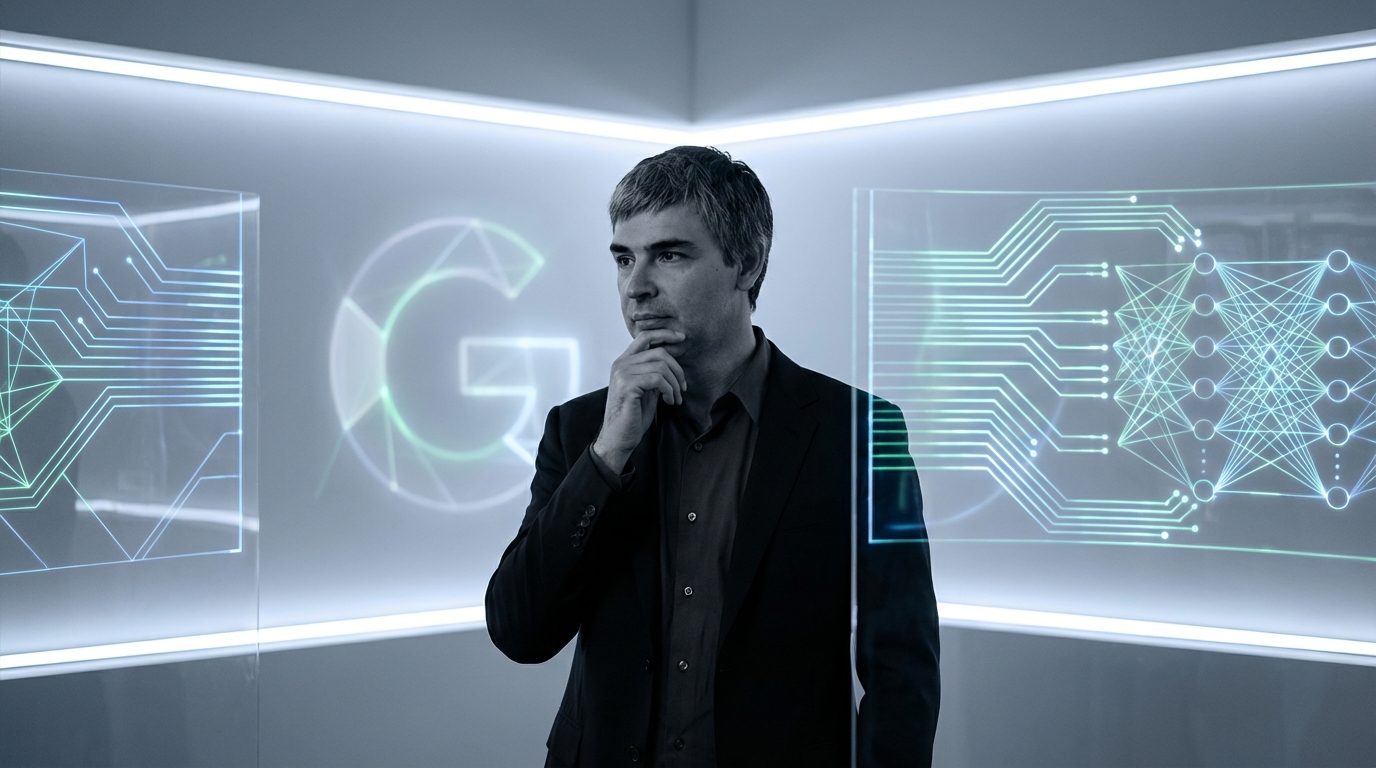
In the pantheon of modern technology giants, few names resonate with the profound impact and quiet visionary spirit of Larry Page. As the co-founder of Google, his journey from a prodigious Stanford Ph.D. student to an architect of the digital age is a testament to relentless innovation and a belief in the transformative power of information. This article delves into the remarkable life and career of Larry Page, exploring his early life and successes, his pivotal role as a Google co-founder, the ingenious creation of Alphabet Inc., his overarching vision for the future of technology, and a look at his substantial financial standing, including projections for Larry Page net worth 2025.
Introduction: The Genesis of a Tech Giant
The internet as we know it today, with its vast repositories of instantly accessible information, owes much to the pioneering work of Larry Page. Alongside Sergey Brin, he conceived a revolutionary method for organizing the web, transforming a chaotic digital landscape into an ordered and searchable universe. Their creation, Google, did more than just provide search results; it democratized information, empowered individuals, and laid the groundwork for countless technological advancements that followed.
From Stanford to Silicon Valley
The story of Google, and by extension, much of modern Silicon Valley, begins in the academic halls of Stanford University. It was here that Page, driven by an insatiable curiosity and a desire to make information universally accessible, embarked on a research project that would unknowingly set the stage for one of the most significant companies in human history. His ambition was not merely to build a better search engine, but to create a comprehensive system for understanding the relationships between all pages on the World Wide Web.
Larry Page's Early Life and Formative Years
Born in Lansing, Michigan, in 1973, Lawrence "Larry" Edward Page was destined for a life immersed in technology. His upbringing provided a fertile ground for his burgeoning genius.
A Childhood Immersed in Technology
Page's father, Carl Victor Page Sr., was a professor of computer science at Michigan State University, and his mother, Gloria Page, was an instructor in computer programming. This environment ensured that computers and technological concepts were a natural part of his childhood. Page recounted that his house was often a mess, with "computers everywhere, and magazines and science and technology magazines all over the place." This early exposure ignited a lifelong passion for innovation and problem-solving, fostering a mind that saw not just problems, but opportunities for systemic change.
Academic Pursuits and Meeting Sergey Brin
Page's academic journey took him to the University of Michigan, where he earned a Bachelor of Science in computer engineering. It was during his time as a Ph.D. student in computer science at Stanford University that fate intervened. In 1995, he met Sergey Brin, another brilliant Ph.D. candidate. While their initial interactions were reportedly marked by disagreement, they soon found common ground in their shared fascination with the World Wide Web and its potential. Their intellectual synergy and complementary skill sets would prove to be the perfect foundation for their future collaboration, leading directly to Larry Page early life and success culminating in Google's inception.
The Birth of Google: Revolutionizing Information Access
The collaboration between Page and Brin quickly moved from theoretical research to practical application, giving rise to what would become Google.
The Backrub Project: A New Way to Rank Pages
Page's doctoral dissertation research focused on the mathematical properties of the World Wide Web, specifically its link structure. He developed the concept of "Backrub" - an algorithm that could analyze the relationships between websites, determining a page's importance based on the number and quality of other pages linking to it. This was a radical departure from existing search engines, which primarily relied on keyword density. Brin quickly joined the project, helping to write the data mining system. Their innovation, later famously named PageRank, was the secret sauce that made their search engine vastly superior.
The Garage Startup and Early Funding
Initially operating out of Page's dorm room, and later out of Susan Wojcicki's garage in Menlo Park, California, the duo officially incorporated Google Inc. on September 4, 1998. Their ambition was immense, but their resources were limited. Early funding came from various sources, including a crucial $100,000 investment from Sun Microsystems co-founder Andy Bechtolsheim. This early support enabled them to move beyond academic research and build a scalable, commercial product, establishing Larry Page Google co-founder as a title recognized worldwide.
The IPO and Global Dominance
Google's rapid ascent was meteoric. By the early 2000s, it had become the dominant search engine globally. The company's initial public offering (IPO) in August 2004 was a landmark event, valuing Google at over $23 billion and instantly making Page and Brin billionaires. Under Page's leadership, both as CEO and later as co-founder, Google expanded aggressively into new areas, including advertising (AdWords, AdSense), mobile operating systems (Android), web browsers (Chrome), and countless other services, solidifying its position as a global technology powerhouse.
Beyond Google: Architecting Alphabet Inc.
Even after Google's unparalleled success, Larry Page's entrepreneurial spirit and long-term vision continued to push boundaries. This led to a significant restructuring in 2015 with the creation of Alphabet Inc.
The Rationale Behind Alphabet's Formation
As Google grew, it ventured into increasingly diverse and sometimes unrelated fields, from self-driving cars (Waymo) to life sciences (Verily). Page recognized that bundling all these ambitious, often experimental, projects under the single "Google" umbrella could create inefficiencies and distract from the core advertising business. Alphabet was conceived as a holding company, allowing each subsidiary to operate with greater autonomy while still benefiting from shared resources and Page's strategic oversight. This move epitomized Larry Page Alphabet future thinking.
Larry Page's Role as Alphabet CEO
As CEO of Alphabet Inc. from 2015 to 2019, Larry Page articulated the company's grand vision: to empower great companies and foster innovation across a wide range of industries. He aimed to streamline Google's sprawling empire, making it more agile and accountable. This new structure allowed Page to focus on the "other bets"--the long-term, high-risk, high-reward ventures that he believed held the key to future technological breakthroughs, truly defining his impact on the Larry Page Alphabet future.
Fostering Innovation in Diverse Ventures
Under Page's direction, Alphabet became a launchpad for ambitious projects. Divisions like Calico (researching aging and life extension), Verily (life sciences research and development), and Waymo (autonomous driving technology) received significant investment and strategic guidance. This approach demonstrated Page's belief that technology could solve some of humanity's most pressing challenges, even if the path to profitability was distant and uncertain.
Larry Page's Vision for Technology and Humanity
Larry Page is not just an engineer; he is a futurist who consistently thinks on a grand scale about technology's potential.
Long-Term Bets and Moonshot Projects
Page famously championed "moonshot" projects - initiatives that are incredibly ambitious, have a low probability of success, but if successful, could have an enormous positive impact on the world. This philosophy underpins much of Alphabet's "other bets," encouraging employees to think beyond incremental improvements and pursue disruptive innovations. His vision for the future emphasizes leveraging technology to solve global problems, not just create profitable products.
AI, Self-Driving Cars, and Life Sciences
Key areas of Page's focus have included artificial intelligence, where Google has become a global leader, developing advanced machine learning capabilities that power everything from search to autonomous systems. Self-driving cars, through Waymo, represent his commitment to revolutionizing transportation and enhancing safety. In the life sciences, through Verily and Calico, he has invested in extending human life and improving health outcomes. These ventures showcase his belief in technology's ultimate purpose: to serve humanity and create a better future.
Larry Page's Current Status and Impact on Alphabet's Future
While Page has stepped back from day-to-day management, his influence remains indelible.
Stepping Back from Day-to-Day Operations
In December 2019, Larry Page and Sergey Brin announced their decision to step down from their respective roles as CEO and President of Alphabet. Sundar Pichai, then CEO of Google, took over as CEO of both Google and Alphabet. This transition marked a new chapter, allowing Page to focus on personal passions and potentially new ventures, while still remaining connected to the company he co-founded.
Continuing Influence as a Board Member and Shareholder
Despite stepping down from executive roles, both Page and Brin remain significant shareholders and members of Alphabet's Board of Directors. Their substantial voting power ensures that their vision and strategic insights continue to guide the company's direction. Page's foundational principles of innovation, long-term thinking, and a commitment to solving big problems remain deeply ingrained in Alphabet's corporate culture, influencing the Larry Page Alphabet future.
What His Legacy Means for Future Innovations
Larry Page's legacy extends far beyond Google Search. His belief in moonshot projects and the creation of Alphabet have established a framework for continuous, ambitious innovation. Future technologies emerging from Alphabet - whether in AI, quantum computing, or biotechnology - will undoubtedly carry the imprint of Page's original vision: to leverage technology to expand human capability and solve some of the world's most complex challenges. His impact on the Larry Page Alphabet future is assured through the innovative culture he fostered.
Larry Page Net Worth 2025: A Glimpse into Immense Wealth
Larry Page's immense wealth is a direct reflection of Google's monumental success and Alphabet's continued growth.
Sources of Wealth: Google, Alphabet, and Investments
The vast majority of Larry Page's net worth is derived from his substantial ownership stake in Alphabet Inc. Through his Class B shares, which carry enhanced voting rights, he maintains significant control over the company. Beyond his Alphabet holdings, Page has likely made various personal investments, though details of these are largely private. His financial success is intricately tied to the performance of the global technology sector and Alphabet's relentless innovation in artificial intelligence, cloud computing, and its diverse portfolio of "other bets."
Philanthropy and Personal Ventures
While often private about his philanthropic endeavors, Page has contributed to various causes, notably through the Page Family Foundation. He is also known for his interest in sustainable energy and other forward-thinking initiatives. As with many ultra-high-net-worth individuals, his wealth is not merely static but actively managed and often channeled into ventures that align with his broader vision for societal improvement and technological advancement.
Projections and Economic Influence
Projecting Larry Page net worth 2025 is speculative, as net worth fluctuates daily with market conditions. However, given Alphabet's dominant position in key growth sectors like AI, cloud computing, and digital advertising, combined with its strong balance sheet and ongoing innovation, it is reasonable to expect his net worth to continue its upward trajectory, barring unforeseen economic downturns or significant personal divestitures. Analysts widely predict continued growth for Alphabet, underpinning the sustained wealth of its co-founders. His economic influence extends beyond his personal fortune, as his investment decisions and the strategic direction of Alphabet have ripple effects across global markets and technological development.
Conclusion: The Enduring Legacy of a Modern Pioneer
Larry Page's journey from a curious Stanford student to a technology titan is a compelling narrative of vision, perseverance, and relentless innovation. As a Larry Page Google co-founder, he didn't just build a company; he fundamentally reshaped how the world accesses information. His subsequent creation of Alphabet Inc. further solidified his legacy as a strategist who understood the necessity of fostering diverse innovation while maintaining focus. While he has stepped back from the daily operations, his influence on the Larry Page Alphabet future and the broader technological landscape remains profound. His commitment to "moonshots" and solving humanity's grand challenges ensures that his vision continues to inspire and guide the pursuit of groundbreaking technologies. As we look towards Larry Page net worth 2025 and beyond, his most enduring contribution will undoubtedly be the framework he established for continuous, bold innovation--a legacy that will shape the digital age for generations to come.